Home / Services / Nebulisation Therapy

Nebulisation Therapy

Targeted aerosol delivery for acute exacerbations of asthma, COPD and bronchitis.

About this service

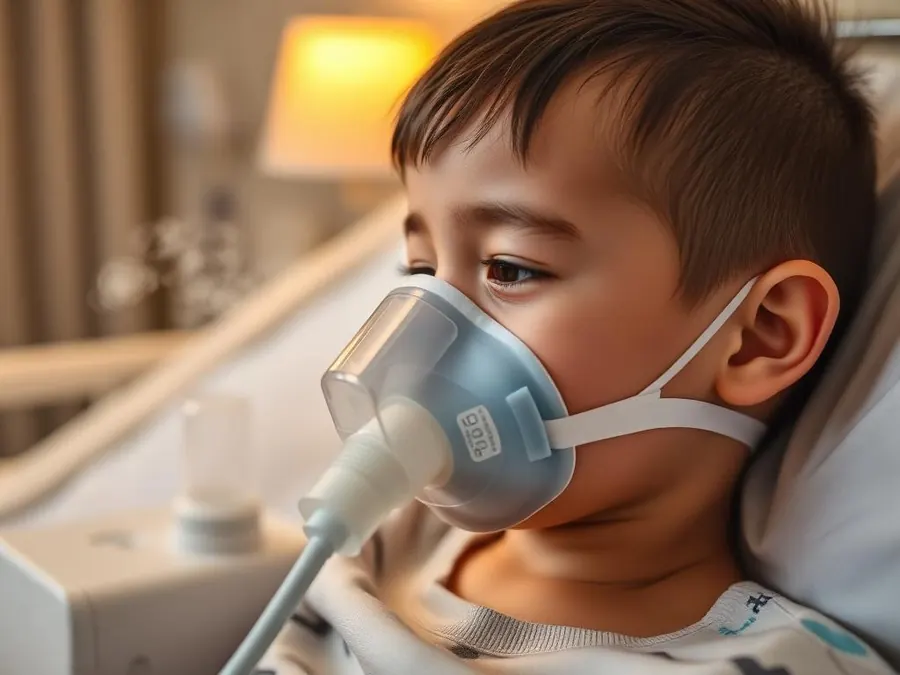
Nebulisation therapy delivers medication directly to the airways as a fine mist — used for acute asthma attacks, COPD exacerbations, bronchitis and post-operative chest physiotherapy.

  • Walk-in service during OPD hours
  • Individual disposable kits — no cross infection
  • Pulse-oximetry monitoring during therapy
  • Inhaler-to-nebuliser step-down counselling

About Nebulisation Therapy at Samarth Chest Hospital, Bharuch

Nebulisation converts liquid medication into a fine mist that can be inhaled deep into the airways, providing rapid relief in acute asthma attacks, COPD exacerbations, viral bronchitis and post-operative chest care. It is especially useful for children, elderly patients or anyone temporarily unable to coordinate an inhaler.

Who typically needs this

  • Acute asthma attack or COPD exacerbation
  • Severe bronchitis with mucus plugging
  • Children unable to use MDI-with-spacer
  • Post-operative chest physiotherapy
  • Adjunct therapy after a lower respiratory tract infection

How to prepare

  • No fasting is required
  • Wipe the face and mouth clean
  • Loosen tight clothing at the chest and neck
  • Sit upright — nebulisation is less effective when supine

What to expect

  • Baseline SpO₂ and pulse are recorded
  • Fresh disposable mask/mouthpiece is used
  • Therapy usually lasts 8–15 minutes per session
  • SpO₂ is monitored continuously
  • Post-therapy peak-flow or SpO₂ is documented

After the visit

  • Rinse mouth after steroid nebulisation to prevent oral thrush
  • Rest for 15–20 minutes before leaving
  • Step-down plan to inhaler-with-spacer at the earliest safe opportunity
  • Written advice on when to return for the next dose

Why patients in Bharuch choose Samarth Chest Hospital

Frequently asked questions

Is nebulisation stronger than an inhaler?

Not necessarily — a correctly used inhaler with a spacer delivers similar or higher lung doses. Nebulisation is preferred when the patient is too breathless, too young or too weak to use an inhaler.

How long does a session take?

A standard session runs 8–15 minutes. We monitor SpO₂ throughout and document response before you leave.

Are there side-effects?

Mild tremor, palpitations or a temporary bitter taste can occur with bronchodilators. Steroid nebulisation needs a mouth rinse afterwards to avoid oral thrush.

Can nebulisation replace daily inhalers?

No. Daily control still needs a correctly-used inhaler. Nebulisation is a rescue and adjunct therapy — not a long-term substitute.

Is it safe for children and elderly?

Yes, with appropriate mask sizes, monitoring and drug doses supervised by the pulmonologist's team.

The information above is educational and does not replace an in-person consultation. For a personalised plan, book with Dr Saurabh Bhatt (MD Pulmonology) at Samarth Chest Hospital & ICU, 4th Floor, RK Casta, Bharuch — call +91 90161 12968 or WhatsApp us.

Other services we offer