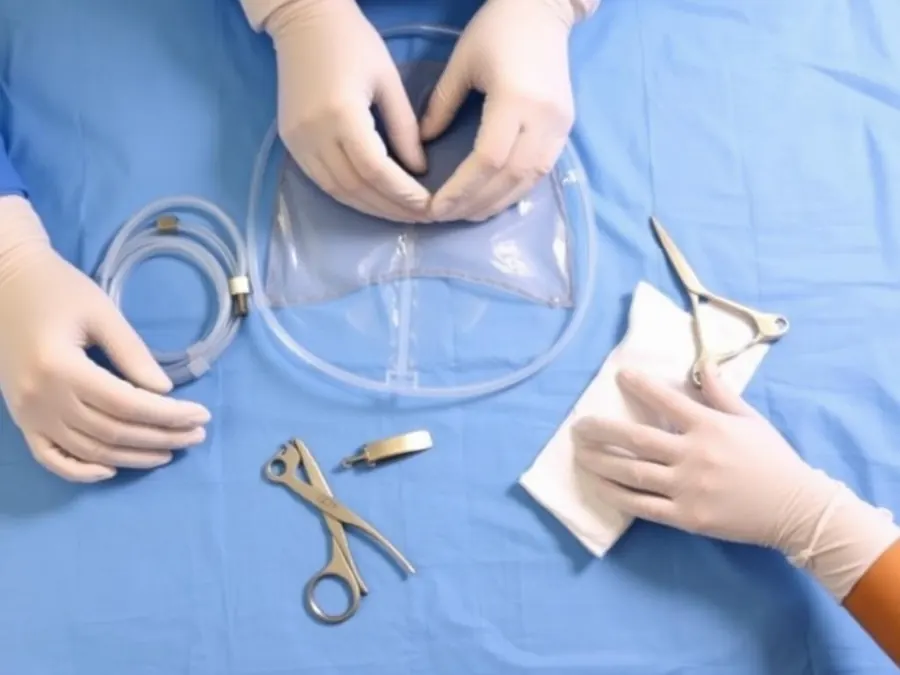
Safe chest-tube placement for pneumothorax, hydrothorax and post-surgical drainage.
Safe bedside Intercostal Drainage (ICD / chest tube) placement for pneumothorax, large pleural effusion, empyema and post-operative drainage — performed by experienced pulmonologists with continuous monitoring.
Intercostal Drainage (ICD) — commonly called a chest tube — is inserted between the ribs to drain air, pus, blood or fluid from the pleural space around the lung. It is a life-saving procedure in pneumothorax, empyema, large pleural effusions and post-traumatic haemothorax, and is performed under strict aseptic precautions with continuous monitoring.
The skin and rib area are numbed with local anaesthesia, so the insertion itself is not sharply painful. Mild soreness at the site for a few days is normal and managed with oral analgesics.
From a few days to about 2 weeks, depending on the cause. It is removed once the lung has fully expanded, drainage has decreased and there is no ongoing air leak.
Yes — patients with an ICD are admitted for monitoring of drainage, air leak and lung re-expansion, and to detect complications early.
Risks are low in experienced hands and include local pain, bleeding, infection or re-expansion pulmonary oedema. Ultrasound guidance and strict asepsis minimise these.
A confirmatory chest X-ray is taken, a small dressing is applied and most patients are discharged within 24 hours with a follow-up review.
The information above is educational and does not replace an in-person consultation. For a personalised plan, book with Dr Saurabh Bhatt (MD Pulmonology) at Samarth Chest Hospital & ICU, 4th Floor, RK Casta, Bharuch — call +91 90161 12968 or WhatsApp us.